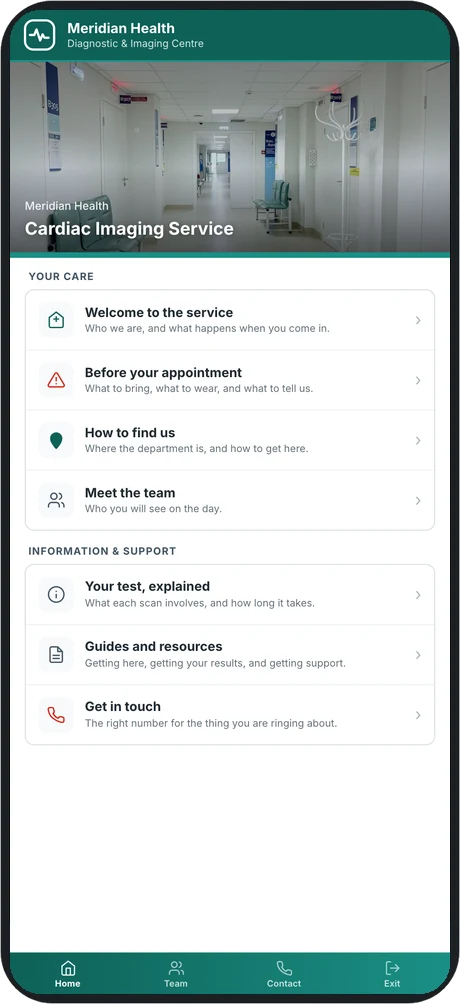
PatientMemo is a digital platform that gives your patients one branded place for the practical information they need: your care team, clinic details, condition and procedure explainers, contacts and reminders. It opens from a link or a QR code: no app to download, and no patient login.
Built for NHS providers and research units. The same platform, branded and configured for each.
The thing PatientMemo usually replaces is not another platform. It is a leaflet, a page on a website written for somebody else, a conversation repeated at every appointment, and whatever a patient finds when they look it up at home.
Printed in a batch, accurate on the day it was written, and wrong the moment a clinic moves, a number changes or a pathway is revised.
Written for the organisation rather than for this service, several clicks deep, and awkward to read on the phone someone actually has with them.
The same questions answered again at every appointment, because there is nowhere specific to send someone afterwards.
What a patient reads at eleven at night, from whoever ranks highest, with nobody from the treating service in the room.
PatientMemo gives the service one place to put all of it: written by the clinical team, carrying the organisation’s own branding, and opened from a link the service sends out.
Whether you are an NHS provider or a research unit, PatientMemo deploys as a clinical service companion or a research participant companion, configured entirely through the admin with no code changes required.
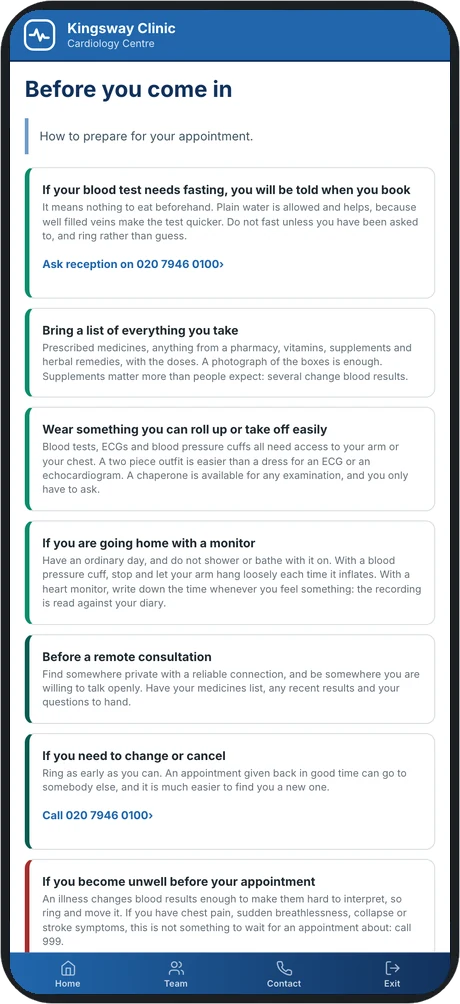
Give patients one branded mobile place for what to expect, who to contact and where to go. It is the practical information they otherwise search for, lose, or ring the service to ask about.
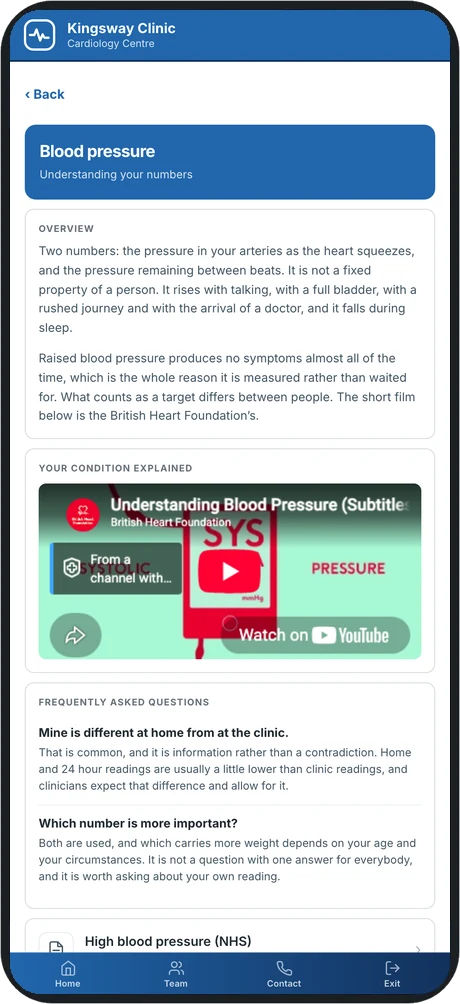
Publish condition, procedure and test information in language patients can understand. It is written, reviewed and controlled by your own clinical team through the PatientMemo admin.
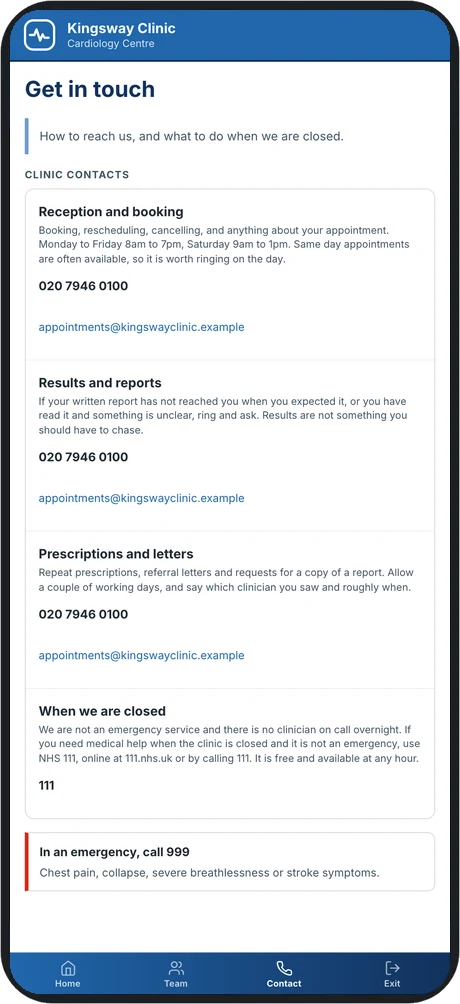
Patients often do not know whether to ring booking, imaging, the nursing team or a consultant's secretary, so they ring the wrong one, or nobody. PatientMemo makes the correct route obvious, alongside clear guidance on when to seek urgent help.
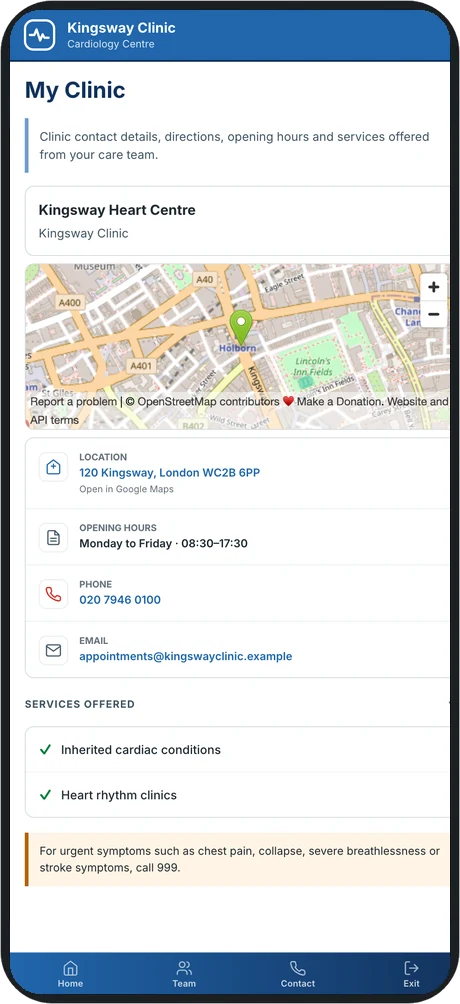
Patients can find the clinic's address, opening hours, phone number and the services offered there, so they arrive at the right building, on the right day, prepared.
Every screen is designed to be calm, clear and accessible, carrying the brand your patients already recognise.
PatientMemo is designed for rapid deployment. No bespoke development, just content setup in the PatientMemo admin.

Add your organisation, clinics, clinicians and content in the PatientMemo admin. No code changes required.
Share a service-specific URL or QR code. Patients open it on any device.
Your clinical team edits leaflets, contacts and reminders in the admin. You own every word patients read, and you control who on your team can publish it.
Whether you are an NHS provider or a research unit, PatientMemo holds no patient records and needs no integration with your electronic record, so it deploys on the strength of the information your service already publishes.

Deploy for any number of services and organisations from a single shared platform: a trust's departments, several services across one organisation, or a portfolio of studies, each branded independently.
The current release does not hold patient-identifiable clinical records and has no patient login, so there is no record set for your information governance team to assess before you start.
PatientMemo does not connect to your electronic patient record. Content is managed entirely through the PatientMemo admin, so your clinical team controls what patients see without waiting on a development cycle.
Patients open PatientMemo in their browser and can add it to their home screen if they want to. Works on iPhone and Android.
Each service carries your own logo, colours and banner text automatically: a trust, a clinic or a study, each looking like itself.
Study protocol documents, participant resources and milestone reminders, configured per study through the same admin.
Run it for one service, with your own team, clinics and explainers in it rather than an example, and see what it changes.